

 By
By Introduction
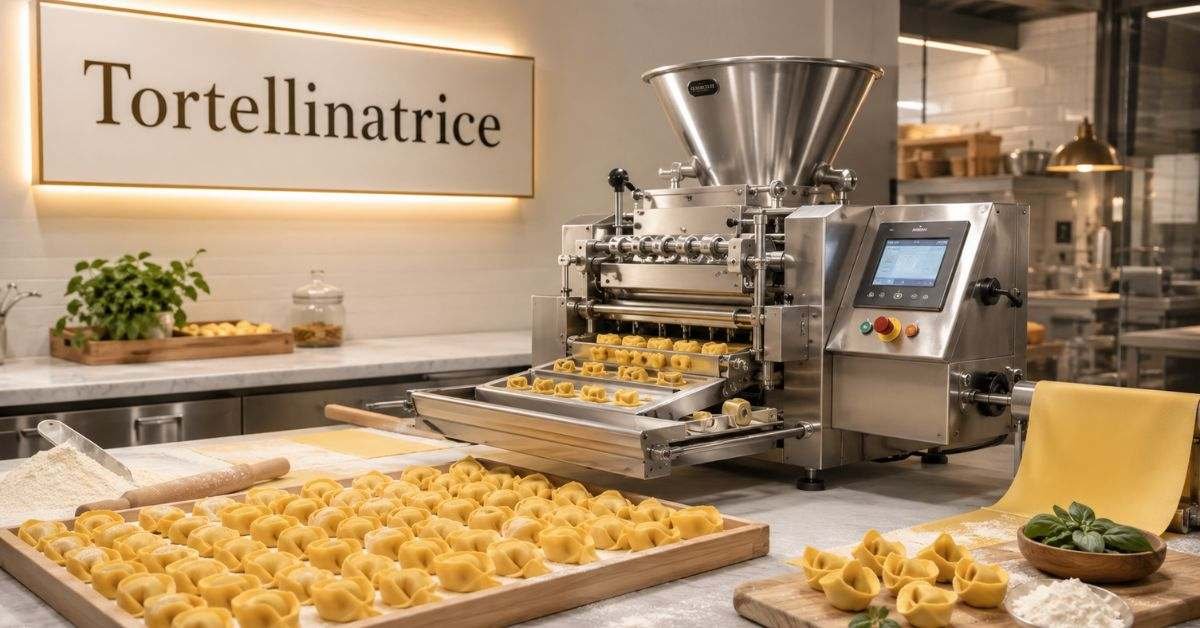
Making tortellini by hand is beautiful, but it is slow, delicate, and hard to scale. A Tortellinatrice helps restaurants, pasta shops, and food producers shape filled pasta with better speed, size control, and sealing consistency. The real question is “which model fits your dough, filling, staff, budget, and cleaning routine?”
You will learn how it works, where it is used, what to check before buying, and how to keep quality close to traditional Italian tortellini.
How a Tortellinatrice Solves Real Pasta Production Problems
A Tortellinatrice is useful when handmade tortellini becomes too slow for daily demand. A chef may enjoy hand-folding pasta for a tasting menu, but that method can become stressful when the kitchen needs hundreds or thousands of pieces every week.
The machine solves four common problems. It improves consistency, saves labor, reduces waste, and supports a cleaner workflow.
Consistency matters because tortellini need even dough thickness, balanced filling, and tight sealing. If one piece has too much filling, it may burst during cooking. If another has too little, customers notice the weak bite.
Labor also matters. Skilled pasta makers are valuable, but repetitive folding can take hours. A machine lets trained staff focus on dough quality, filling flavor, sauce, packaging, and final inspection.
This does not mean automation replaces skill. The best results still depend on dough hydration, filling texture, room humidity, and operator judgment.
Main Parts and How the Machine Works
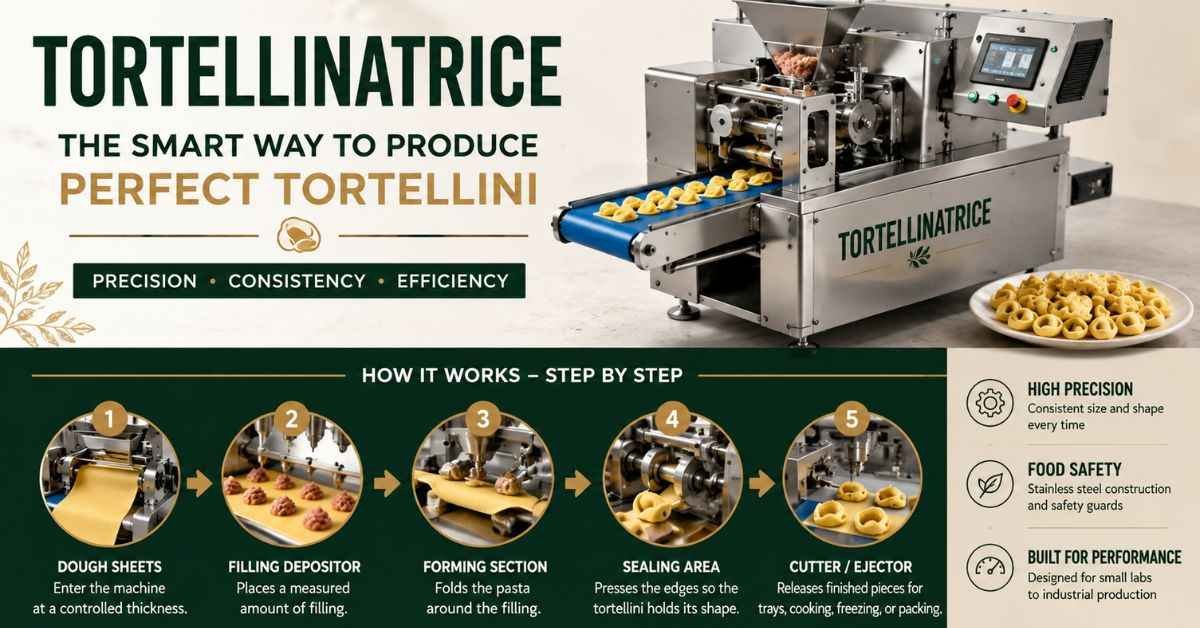
A Tortellinatrice usually combines several systems inside one production line. Small machines may be simple and semi-manual. Industrial models may include conveyors, automatic filling pumps, forming dies, cutters, and safety guards.
The basic workflow is easy to understand:
- Dough sheets enter the machine at a controlled thickness.
- A filling depositor places a measured amount of filling.
- The forming section folds the pasta around the filling.
- The sealing area presses the edges so the tortellini holds its shape.
- The cutter or ejector releases finished pieces for trays, cooking, freezing, or packing.
The most important parts include rollers, filling hoppers, forming molds, pressure controls, cutting units, and removable food-contact parts. Operators should also look for emergency-stop buttons, guards, stable feet, washable surfaces, and simple access for cleaning.
Dough and filling must match the machine. Sticky dough can tear, dry dough can crack, and loose filling can leak. A good trial run should test your actual recipe, not only a manufacturer’s sample dough.
| Machine Type | Best For | Main Benefit | Main Limitation |
| Manual or tabletop model | Home users, demos, very small batches | Low cost and hands-on control | Slow output and more manual skill needed |
| Semi-automatic model | Restaurants and artisan pasta shops | Good balance of speed and recipe control | Needs trained staff for setup and cleaning |
| Industrial model | Factories and high-volume fresh pasta brands | High output and stable portioning | Higher cost, space, maintenance, and training needs |
Tortellinatrice: Featured Snippet Buying Checklist
An automatic or semi-automated device that shapes, fills, folds, seals, and releases tortellini is called a tortellinatrice. It is different from a basic pasta roller because it handles the stuffed-pasta shaping process, not just the dough sheet. Buyers should choose one based on output, dough type, filling texture, hygiene design, available space, and after-sales support.
Use this quick checklist before choosing a model:
- Define your hourly output goal.
- Test your real dough and fill it in the machine.
- Check whether molds match your preferred tortellini size.
- Confirm cleaning access to rollers, hoppers, dies, and belts.
- Ask about spare parts, warranty, and local service.
- Calculate total cost, including training, energy, downtime, and maintenance.
- Verify that food-contact materials meet your market’s safety rules.
- Run a small production trial before full investment.
The “best” machine is not always the largest one. A small pasta shop may need flexibility more than speed. A frozen-food producer may need output, repeatability, and fast sanitation between shifts.
Choosing the Right Model for Your Kitchen or Factory
Before buying a Tortellinatrice, start with your menu and production plan. A retail pasta shop that sells fresh packets every day has different needs than a restaurant that makes one stuffed pasta dish every weekend.
Think about these questions:
- How many servings do you require each hour?
- Will you sell fresh, cooked, chilled, or frozen tortellini?
- Do you use vegetables, cheese, meat, or a combination of fillings?
- How often will you change recipes?
- Who will clean and maintain the machine?
- Do you have enough counters, floor, drainage, and storage space?
For a small restaurant, a compact semi-automatic model may make sense. It can improve speed while keeping the chef in control. The most important thing for a pasta shop is consistency between batches. For a factory, hygiene design, spare parts, and uptime may matter more than every other feature.
| Buyer Situation | Recommended Focus | Practical Example |
| Small restaurant | Flexible setup and easy cleaning | One chef produces tortellini for weekend service |
| Artisan pasta shop | Consistent shape and filling control | Daily fresh pasta packs for local customers |
| Catering business | Batch speed and storage workflow | Preparing filled pasta for events |
| Food manufacturer | High output, safety guards, service contracts | Large runs for chilled or frozen retail products |
Quality, Safety, and Hygiene Standards to Check
A pasta machine touches dough and filling, so hygiene cannot be an afterthought. Food-contact areas should be smooth, corrosion-resistant, non-toxic, and easy to clean. Removable parts help staff wash and inspect the areas where flour, egg dough, meat, cheese, or vegetable filling can collect.
In Europe, food-contact materials must follow rules that protect food quality and consumer health. Food hygiene guidance also expects equipment to be clean, maintained, and built in a way that reduces contamination risk. The FDA Food Code in the US provides model guidelines for cleanliness, food-contact surfaces, and safe equipment.
Ask the supplier for documents before buying. Useful documents may include a user manual, electrical certification, food-contact material statement, cleaning instructions, parts list, and maintenance schedule.
A good cleaning process should include:
- Dry removal of flour and loose dough.
- Disassembly of removable contact parts.
- Washing with approved methods.
- Sanitizing when required by local rules.
- Full drying before reassembly.
- A written cleaning log for staff accountability.
Never buy only by price. A cheap machine that is hard to clean can become expensive through downtime, wasted product, or safety risk.
Common Mistakes
Many buyers choose a Tortellinatrice too quickly because the machine looks impressive in a video. A smooth demo does not prove it will work with your recipe, staff, and kitchen layout.
The first mistake is skipping product testing. Always test your own dough thickness and filling moisture. Ricotta-spinach, meat filling, pumpkin filling, and mushroom filling behave differently.
The second mistake is ignoring cleaning time. Staff may rush the job if taking apart a machine takes too long. That can create hygiene problems and shorten equipment life.
The third mistake is buying too much capacity. A large machine may need more space, power, training, and maintenance than a small shop can manage.
The fourth mistake is forgetting spare parts. Rollers, seals, cutters, belts, and forming molds can wear out. Ask how quickly parts can be delivered.
Pro Tips and Best Practices
For better results, treat the Tortellinatrice as part of a full production system. The machine is only one piece of the workflow.
Keep dough rested but not dry. Pasta sheets should be elastic enough to fold without cracking. Cover dough while waiting, and adjust hydration if your kitchen is warm or dry.
Keep filling firm, smooth, and cold enough to hold shape. A filling that is too wet can leak. A filling with large chunks can block the depositor or create uneven portions.
Create one standard recipe sheet for each filling. Include dough thickness, filling weight, machine setting, room notes, cleaning steps, and cooking test results.
Do a cook test from every batch. Boil a small sample and check shape, sealing, texture, and flavor. This step helps catch problems before customers do.
Train at least two staff members. If only one person knows the machine, production becomes risky when that person is absent.
FAQs
What is this machine?
A tortellini-forming machine is made to produce tortellini by filling, folding, sealing, and shaping pasta. It is more specialized than a normal pasta roller. Restaurants, pasta shops, and manufacturers use it when they need consistent stuffed pasta in larger quantities.
Is this machine only for factories?
No, this machine is not only for factories because smaller semi-automatic models can suit restaurants and artisan pasta shops. Industrial versions are made to make a lot of things. The right choice depends on output needs, space, cleaning time, and how often recipes change.
Can it make gluten-free tortellini?
Yes, some machines can make gluten-free tortellini, but the dough needs careful testing. Gluten-free dough can crack or tear more easily than egg-wheat dough. Ask the supplier for a trial using your own flour blend before buying.
What fillings work best in this machine?
Smooth, firm, and evenly mixed fillings work best because they pass through the depositor cleanly. Meat, cheese, spinach-ricotta, mushroom, and pumpkin fillings can work well. Very wet fillings or large chunks may cause leaking, blockage, or uneven dosing.
How do you clean a tortellini machine safely?
Clean a tortellini machine by removing loose dough, disassembling food-contact parts, washing, sanitizing when required, drying, and reassembling correctly. Always follow the manufacturer’s manual and your local food-safety rules. A written cleaning log helps keep staff consistent.
Does machine-made tortellini still taste authentic?
Machine-made tortellini can taste authentic when the dough, filling, cooking method, and recipe quality are strong. The machine shapes the pasta, but flavor still comes from ingredients and technique. Many producers use automation while respecting traditional Emilia-Romagna pasta standards.
Conclusion
A Tortellinatrice is a smart investment when stuffed-pasta production needs better speed, consistency, and control. It helps kitchens move beyond slow hand-folding while still allowing chefs and producers to protect flavor, texture, and recipe identity.
The best results come from matching the machine to your real production needs. Test your dough, check hygiene design, train staff, and plan maintenance before buying. Used well, a Tortellinatrice can support both traditional tortellini quality and modern food-business efficiency.