 By
By Introduction
Dental disease in pets is easy to miss because dogs and cats often hide pain until the problem becomes serious. That is why nerovet ai dentistry is gaining attention in health technology. It aims to help veterinary clinics review dental images faster, detect hidden problems earlier, and create clearer treatment plans for pet owners.
Pet dental disease is not a small issue. American Humane reports that more than 80% of dogs and 70% of cats show signs of periodontal disease by age three, citing the American Veterinary Dental College. AI tools can support earlier detection, but they should work beside trained veterinary teams, not above them.
Why Is NeroVet AI Dentistry Important?
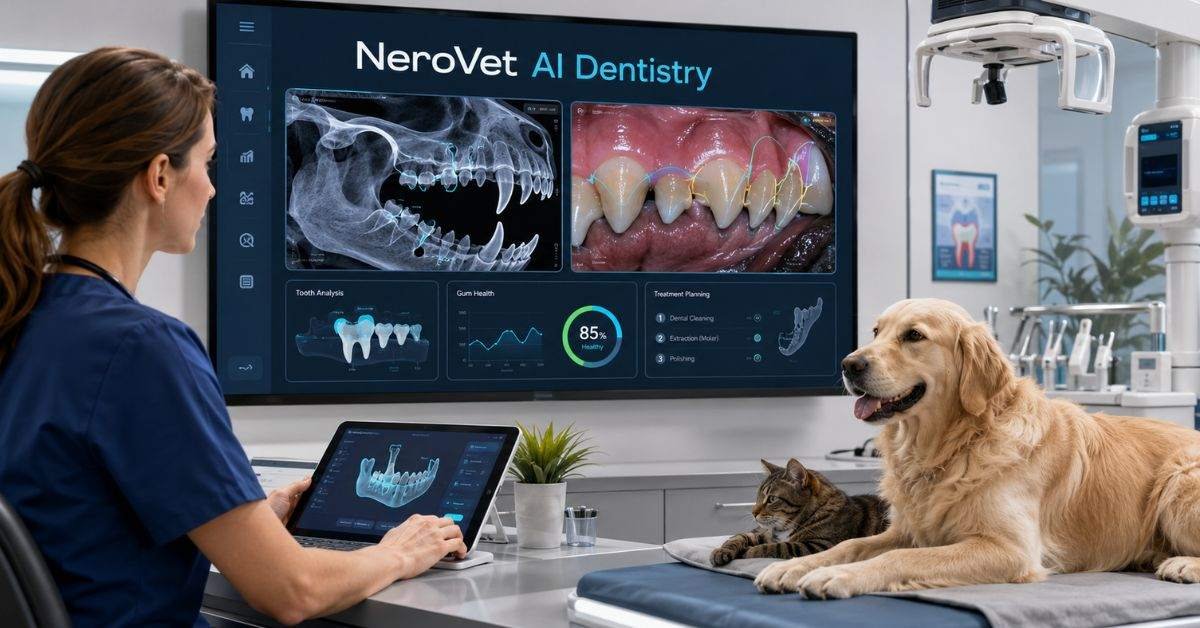
Nerovet ai dentistry is an AI-assisted veterinary dental platform designed to analyze pet dental images, especially dental radiographs. Its main goal is to support veterinarians with faster image review, risk detection, and treatment planning.
The official NeroVet page describes AI pet dentistry as the use of artificial intelligence and machine learning to analyze dental X-rays and images for conditions such as periodontal disease, tooth resorption, and other oral health problems.
In simple words, the system acts like a second set of digital eyes. It may highlight areas that need closer review, such as:
- Bone loss around teeth
- Root abnormalities
- Tooth fractures
- Abscess risk
- Cat tooth resorption
- Periodontal disease patterns
This matters because dental problems often sit below the gumline. UC Davis notes that routine veterinary dental treatment may include radiographs, periodontal charting, scaling, and polishing.
AI can help clinics review images more consistently, especially when the team handles many dental cases on a busy day. Still, the final decision must remain with the veterinarian.
| Area | Traditional Veterinary Dentistry | AI-Assisted Dentistry |
| Image review | Vet manually reviews X-rays | AI highlights possible concerns |
| Speed | Depends on case complexity | May provide faster support |
| Consistency | Can vary by experience | Can standardize image screening |
| Final diagnosis | Veterinarian decides | Veterinarian still decides |
| Client education | Verbal explanation or images | Visual AI reports may help owners understand |
How NeroVet AI Dentistry Fits Into a Real Clinic Workflow
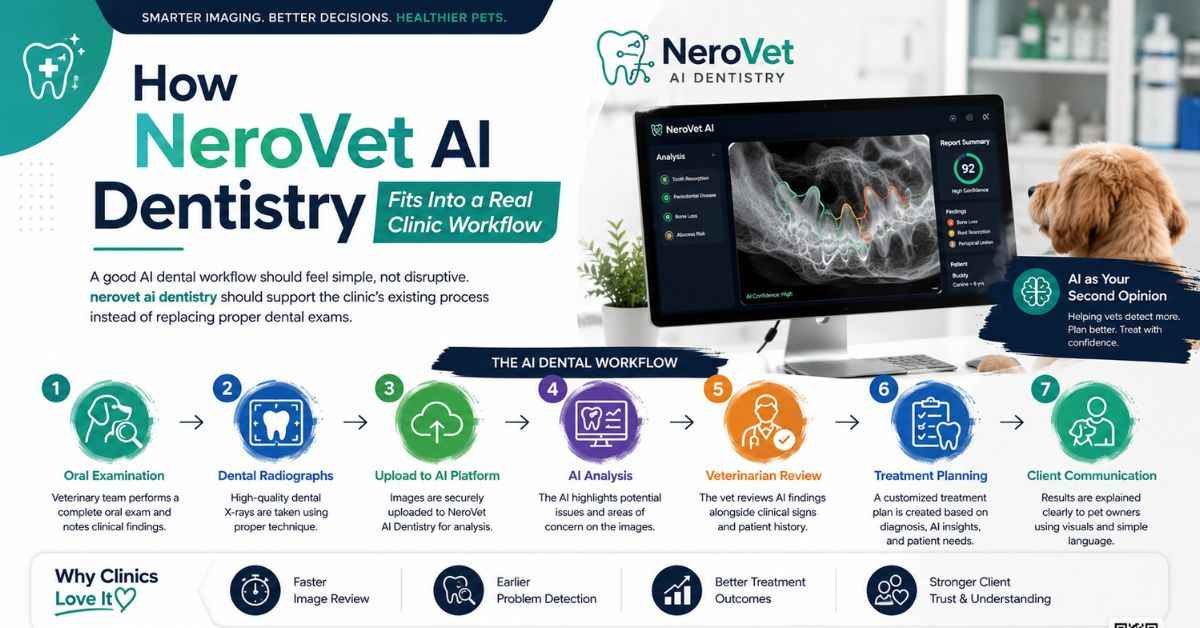
A good AI dental workflow should feel simple, not disruptive. nerovet ai dentistry should support the clinic’s existing process instead of replacing proper dental exams.
A practical workflow may look like this:
- The pet receives an oral exam from the veterinary team.
- The clinic takes dental radiographs when medically appropriate.
- The images are uploaded into the AI platform.
- The AI marks possible dental concerns.
- The veterinarian reviews the AI findings.
- The team compares results with probing, charting, history, and symptoms.
- The vet explains the treatment plan to the pet owner.
This is important because AI only sees what the data allows it to see. It does not know the full patient story unless the veterinarian connects the image findings with the animal’s age, breed, pain signs, previous dental history, and physical exam.
Cornell’s veterinary resource explains that periodontal disease may be hard to recognize early because outward signs are often missing and the main problem may not be visible during a routine visual inspection. This is exactly where imaging and careful clinical review become valuable.
For example, a small senior dog may look fine during a quick mouth check, but dental X-rays may show bone loss under the gumline. AI may flag the area. The veterinarian then decides whether extraction, cleaning, medication, monitoring, or referral is needed.
NeroVet AI Dentistry Definition and Step-by-Step Use
Featured snippet answer: Nerovet ai dentistry is an AI-powered veterinary dental tool that helps analyze pet dental images and supports veterinarians in detecting oral health problems. It is best used as a second opinion for dental radiographs, not as a replacement for a full veterinary exam.
Here is a simple step-by-step process:
- Capture clear dental images
Good image quality matters. Blurry, incomplete, or poorly angled images can reduce AI usefulness. - Upload images securely
Clinics should confirm how patient data, client data, and image files are stored and protected. - Review AI-marked findings
The AI may highlight possible disease areas, but the vet must confirm them. - Compare with clinical signs
Bad breath, gum bleeding, pain, chewing changes, and oral exam findings all matter. - Create a treatment plan
The plan should include the vet’s diagnosis, not only the AI output. - Explain results to the owner
Visual reports can make dental disease easier for pet owners to understand. - Document the final decision
Medical records should show what the AI suggested and what the veterinarian concluded.
| Clinic Checkpoint | Why It Matters |
| Image quality | AI needs clear radiographs to assist well |
| Vet review | Prevents blind trust in automated results |
| Data privacy | Protects client and patient information |
| Consent process | Helps owners understand AI’s role |
| Documentation | Supports medical and legal clarity |
Common Mistakes
One common mistake is treating AI as a final diagnosis. nerovet ai dentistry should support the veterinarian’s decision, not replace it. AI can miss issues, over-flag normal structures, or perform poorly if image quality is weak.
Presenting AI reports to pet owners without providing an explanation is another error. A highlighted area on a dental image may scare an owner if the team does not explain what it means. Vets should translate AI output into plain language.
Clinics should also avoid assuming every AI claim is independently verified. The official NeroVet page mentions high accuracy ranges for AI dental scanning, but clinics should still ask for validation details, training data context, and whether results apply to their patient population.
A final mistake is ignoring ethics and consent. The California Veterinary Medical Association says veterinary practitioners using AI should obtain informed consent from clients and ensure patient and client data privacy.
Pro Tips and Best Practices
Use nerovet ai dentistry as part of a complete dental protocol. It works best when paired with radiographs, charting, periodontal probing, anesthesia safety, pain control, and client education.
Best practices include:
- Ask the vendor how the model was trained and tested.
- Check whether the platform supports dogs, cats, or other species.
- Compare AI results with veterinarian findings for the first 30–60 days.
- Create a clinic policy for AI documentation.
- Tell clients that AI is a support tool, not a separate doctor.
- Keep final treatment decisions under the licensed veterinarian’s name.
This balanced approach matches the broader direction of veterinary imaging AI. A 2024 review in Research in Veterinary Science explains that AI tools are entering veterinary diagnostic imaging, but they should act as decision-support tools rather than replacements for human judgment.
For clinics, the best goal is not “AI replaces dental skill.” The better goal is “AI helps the team catch more problems, explain care more clearly, and reduce missed findings.”
FAQs
What is nerovet ai dentistry?
nerovet ai dentistry is an AI-assisted platform for veterinary dental image analysis. It helps veterinarians review pet dental X-rays and identify possible oral health problems. The final diagnosis should always come from a licensed veterinarian who reviews the full patient case.
Can NeroVet AI Dentistry replace a veterinarian?
No, nerovet ai dentistry cannot replace a veterinarian. It can support image review and treatment planning, but it cannot perform a full oral exam, understand the complete medical history, or make independent clinical decisions. The veterinarian remains responsible for diagnosis and care.
Is AI dental scanning safe for pets?
AI dental scanning itself does not physically affect the pet because it analyzes images after they are captured. The safety question relates more to dental imaging, anesthesia, data handling, and proper clinical use. Pet owners should ask their veterinarian how images are taken and reviewed.
What dental problems can AI help detect in pets?
AI may help flag periodontal disease, bone loss, tooth resorption, root changes, abscess risk, fractures, and other image-visible oral problems. These findings still need veterinary confirmation because dental disease can involve pain, infection, gum pockets, and health factors beyond the image.
Should pet owners trust AI dental results?
Pet owners should trust AI dental results only when a veterinarian explains and confirms them. AI can be helpful, but it is not perfect. Owners should ask what the image shows, what the vet found during the exam, and why a treatment is recommended.
How can clinics use AI results in client communication?
Clinics can use AI reports to show owners where dental problems may exist. Visual explanations often make treatment easier to understand. The best approach is to combine AI images with simple language, cost transparency, pain explanation, and clear next steps.
What should a clinic check before adopting this technology?
A clinic should check accuracy evidence, species support, data privacy, consent workflow, integration with dental imaging systems, staff training needs, and documentation standards. It should also test the platform against real cases before relying on it in daily dental planning.
Conclusion
Nerovet ai dentistry can be useful for clinics that want faster image review, clearer dental reports, and stronger support for early pet oral disease detection. Its real value comes when it works with radiographs, clinical exams, veterinary judgment, and honest owner communication.
The safest way to view nerovet ai dentistry is as a smart assistant, not a replacement for professional care. Clinics that use it responsibly can improve workflow, support better treatment discussions, and help more pets receive dental care before hidden disease becomes painful.