

 By
By Introduction
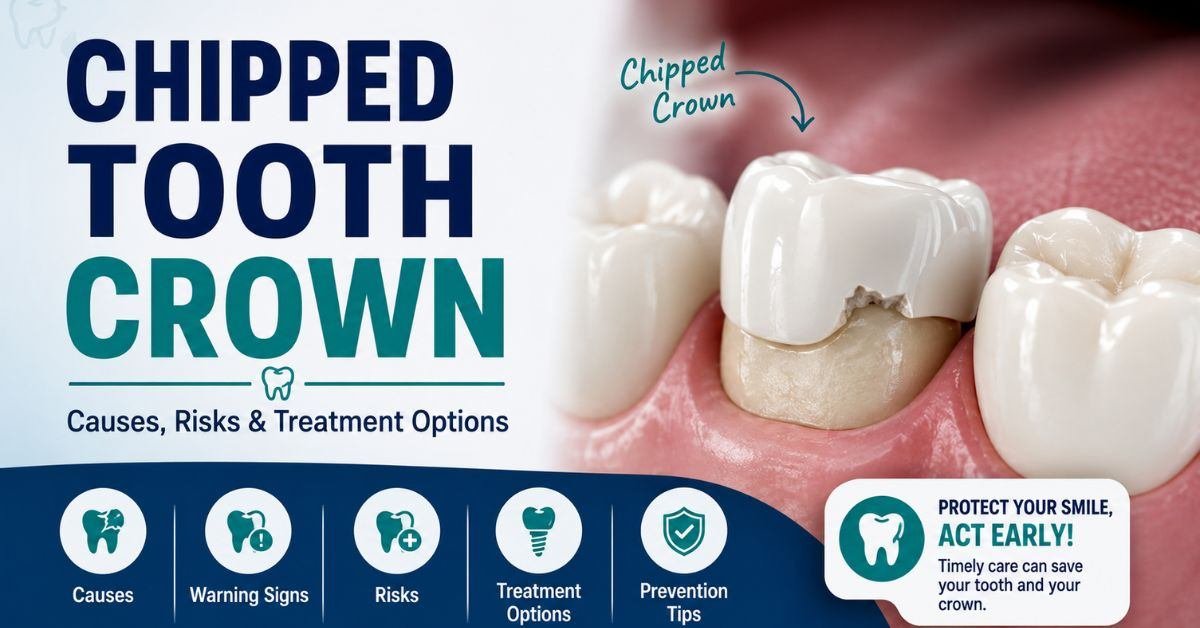
A Chipped Tooth Crown can feel small at first, especially if it does not hurt. But a rough edge, crack, or missing piece may expose the tooth under the crown, trap food, irritate your tongue, or lead to decay if ignored.
Dental crowns are made to protect weak, broken, decayed, or root canal-treated teeth. The ADA explains that crowns cover teeth to restore shape, strength, and appearance, while Cleveland Clinic notes that crowns are durable but can still crack or need replacement over time.
The good news is that many crown chips are fixable. The right treatment depends on the size of the chip, the crown material, your symptoms, and whether the tooth underneath is still healthy.
What Is a Chipped Tooth Crown, and Why Should You Care?
A Chipped Tooth Crown is a dental crown that has lost part of its outer surface, developed a crack, or broken along an edge. It may affect only the crown material, or it may expose the natural tooth underneath.
Crowns are often called “caps” because they fit over the whole visible part of a tooth. Cleveland Clinic states there is no difference between a dental cap and a crown.
A small chip may only need polishing. A deeper crack may need bonding, crown replacement, or treatment for the tooth under the crown.
You should care because crowns protect teeth that are already weaker than normal. If the seal around the crown breaks, bacteria can enter the space between the crown and tooth. Cleveland Clinic notes that crowns can trap bacteria and lead to decay when they do not fit properly.
Quick Signs to Watch For
| Sign | What It May Mean | How Soon to Call a Dentist |
| Sharp edge cutting tongue or cheek | Broken crown edge | Same day or next day |
| Sensitivity to cold, heat, or sweets | Tooth or margin may be exposed | Within 24–48 hours |
| Pain when biting | Crack, bite problem, or tooth issue | Same day if strong pain |
| Loose crown | Cement failure or tooth damage | Same day |
| Bad taste, odor, or swelling | Possible decay or infection | Urgent care |
Even if there is no pain, do not assume the crown is safe. Some cracks are painless at first but worsen under chewing pressure.
What Causes a Chipped Tooth Crown to Break or Crack?
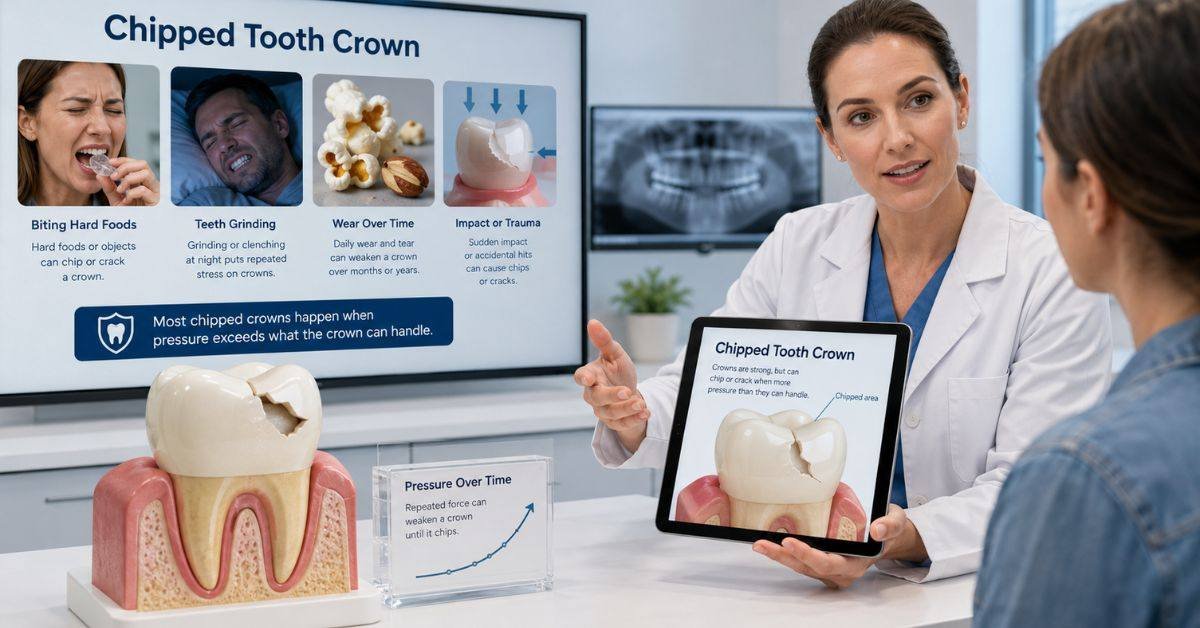
Most cases of Chipped Tooth Crown damage happen because the crown faces more pressure than it can handle. This pressure may happen suddenly or slowly over months.
Common causes include:
- Biting ice, hard candy, popcorn kernels, nuts, or bones
- Chewing sticky foods that pull at the crown
- Grinding or clenching teeth during sleep
- A fall, sports injury, or hit to the face
- An old crown that has worn down
- A crown that no longer fits well
- Decay under the crown weakening support
Cleveland Clinic lists hard foods such as ice, hard nuts, popcorn kernels, and sticky candies as foods that can damage or dislodge crowns.
Bruxism is another major reason. NIDCR explains that bruxism means grinding, clenching, or gnashing teeth, and severe cases can lead to chipped, cracked, flattened, or loose teeth. Mayo Clinic also notes that severe bruxism can damage crowns and other dental repairs.
Crown Material Matters
Not all crowns break the same way. Metal crowns rarely chip, while porcelain layers can chip over time. Cleveland Clinic notes that porcelain-fused-to-metal crowns may chip and expose metal, and pressed ceramic layers can also chip.
| Crown Type | Common Strength | Common Weak Point |
| Porcelain or ceramic | Natural appearance | Can chip under heavy force |
| Porcelain-fused-to-metal | Strong core with tooth-colored layer | Porcelain coating may chip |
| Zirconia | Very strong ceramic option | Still needs proper bite fit |
| Resin temporary crown | Useful short-term | More likely to break |
| Metal crown | High durability | Less natural appearance |
ADA guidance also notes that restorative materials differ in physical properties, strength, durability, and clinical use, so material choice should match the case.
Chipped Tooth Crown Repair: What Should You Do First?
If your Chipped Tooth Crown, rinse your mouth, avoid chewing on that side, protect sharp edges with dental wax if needed, save any broken piece, and call your dentist. Do not glue the crown yourself or keep eating hard foods on it.
- Rinse gently. Use warm water to clear food or debris. Salt water may help keep the area clean.
- Check for sharp edges. If the crown cuts your tongue or cheek, cover the edge with orthodontic wax or temporary dental wax from a pharmacy.
- Avoid chewing on that side. Soft foods are safer until a dentist checks the crown.
- Save broken pieces. Put the crown piece in a small bag or container and take it to your appointment.
- Call your dentist. Explain whether you have pain, swelling, bleeding, looseness, or sensitivity.
- Seek urgent help if symptoms are severe. Facial swelling, fever, uncontrolled bleeding, trouble opening your mouth, or trauma to the jaw needs urgent care.
Do not use household glue, nail glue, super glue, or random online “repair hacks.” These products can irritate tissue, affect the fit, and make professional repair harder.
How Dentists Decide Between Repair and Replacement
A dentist does not decide based only on how the crown looks. They check the full picture.
They may examine:
- Size and depth of the chip
- Crown material
- Age of the crown
- Whether the crown is loose
- Your bite pressure
- Decay near the crown margin
- Condition of the tooth underneath
- Gum health around the crown
- Whether you grind your teeth
A small cosmetic chip on a front porcelain crown may be repaired with composite bonding. A rough edge may only need smoothing and polishing. A large crack, loose crown, open margin, or exposed tooth may need a new crown.
If decay has reached deep into the tooth, the dentist may need to treat the tooth first. In some cases, that may mean root canal treatment before a new crown. If the tooth cannot support a crown anymore, extraction and replacement options may be discussed.
Cleveland Clinic says crowns can last five to 15 years with proper care, but damage, wear, or cracks may make replacement necessary sooner.
Common Mistakes
Many people make a Chipped Tooth Crown worse without meaning to. The first mistake is waiting too long because there is no pain.
Pain is not the only sign of a problem. A crown can have an open edge or small crack before the nerve reacts.
Another mistake is chewing normally. One hard bite can turn a small chip into a deep fracture.
Avoid these common mistakes:
- Chewing ice, nuts, or hard snacks on the damaged side
- Ignoring sensitivity because it comes and goes
- Trying to file the crown at home
- Using glue to reattach a broken piece
- Pulling off a loose crown without dental advice
- Skipping the appointment after symptoms improve
- Not telling the dentist about grinding or clenching
A real-life example: someone chips a back crown on a popcorn kernel but feels no pain. They keep chewing on it for two weeks. Food starts packing near the gumline, and the tooth becomes sensitive. What may have been a quick polish or repair may now need replacement because the margin is open.
Pro Tips / Best Practices
The best way to protect a Chipped Tooth Crown is to reduce pressure and keep the crown margin clean.
Brush twice daily with fluoride toothpaste, floss gently around the crown, and keep regular dental cleanings. Cleveland Clinic recommends brushing twice daily, flossing once daily, avoiding hard or chewy foods, and asking about a custom mouth guard if you grind or clench.
If you grind your teeth, ask your dentist about a night guard. NIDCR lists mouth guards as a treatment option that separates teeth and helps prevent tooth damage from grinding.
Helpful habits include:
- Cut hard foods into smaller pieces
- Avoid using teeth to open packages
- Wear a sports mouth guard during contact sports
- Ask for bite adjustment if the crown feels “high”
- Report new sensitivity early
- Replace worn night guards when they thin out
- Avoid chewing pens, fingernails, or ice
In 2026, many dental offices will also use digital scans, CAD/CAM tools, and same-day crown systems in selected cases. Cleveland Clinic notes that CAD/CAM technology can allow some crowns to be made in one visit, although it is not right for every patient.
FAQs
Can a Chipped Tooth Crown heal on its own?
No, a Chipped Tooth Crown cannot heal on its own because crown material is not living tissue. A tiny rough edge may feel less noticeable over time, but the damage remains. A dentist should check it to prevent decay, bite problems, or further cracking.
Is a Chipped Tooth Crown an emergency?
A Chipped Tooth Crown is an emergency if you have severe pain, swelling, bleeding, a loose crown, exposed tooth structure, or sharp edges cutting your mouth. If there is no pain and the chip is small, it may not need emergency treatment, but you should still call your dentist promptly.
Can I eat with a chipped crown if it does not hurt?
You can eat soft foods carefully, but you should avoid chewing on the damaged side. Pain-free does not always mean safe. Hard, sticky, or crunchy foods can make the chip larger, loosen the crown, or expose the tooth under the restoration.
Can a chipped crown damage the tooth underneath?
Yes, a Chipped Tooth Crown can damage the tooth underneath if the crown seal opens or the crack exposes natural tooth structure. Bacteria and food can enter the gap, which may lead to decay, sensitivity, infection, or the need for more complex dental treatment.
Can a dentist repair a chipped crown without replacing it?
Yes, a dentist can sometimes repair a chipped crown without replacing it if the damage is small and the crown still fits well. Repair may include smoothing, polishing, or bonding with tooth-colored resin. Deep cracks, loose crowns, and exposed tooth structure often need replacement.
How does a dentist know if the crown needs replacement?
A dentist checks the chip size, crown fit, bite, X-rays, crown age, gum health, and tooth condition. If the crown is stable and the damage is minor, repair may work. If the crown is cracked deeply, loose, leaking, or old, replacement is usually safer.
What should I avoid after crown repair?
Steer clear of hard meals, sticky candies, chewing ice, biting your nails, and chewing pens during crown restoration. Follow your dentist’s care instructions, especially if bonding was used. If you grind your teeth, a night guard may help protect the repaired or new crown.
Conclusion
A Chipped Tooth Crown may look like a small dental problem, but it deserves quick attention. The crown protects a tooth that may already be weak, cracked, root canal-treated, or heavily filled. Calling your dentist early can often prevent pain, decay, infection, or a more expensive repair.
Treating a Chipped Tooth Crown depends on the chip size, crown material, bite pressure, and tooth health. Minor chips may be polished or bonded, while deeper cracks may need a new crown. Until your appointment, keep the area clean, avoid chewing on that side, and protect sharp edges safely.