

 By
By Introduction
A tattoo can hold a memory you do not want to forget, but some memories are heavy. That is why the poison tree tattoo meaning connects with betrayal, toxic love, family conflict, hidden anger, and emotional trauma.
Inspired by William Blake’s poem A Poison Tree, this tattoo is not only about darkness. It shows what can happen when pain stays unspoken and turns into resentment. For many wearers, the poison tree tattoo meaning is a warning, a wound, and a healing symbol.
What Does a Poison Tree Tattoo Mean?
The poison tree tattoo meaning is usually linked to suppressed anger, emotional wounds, resentment, and the danger of burying negative feelings for too long.
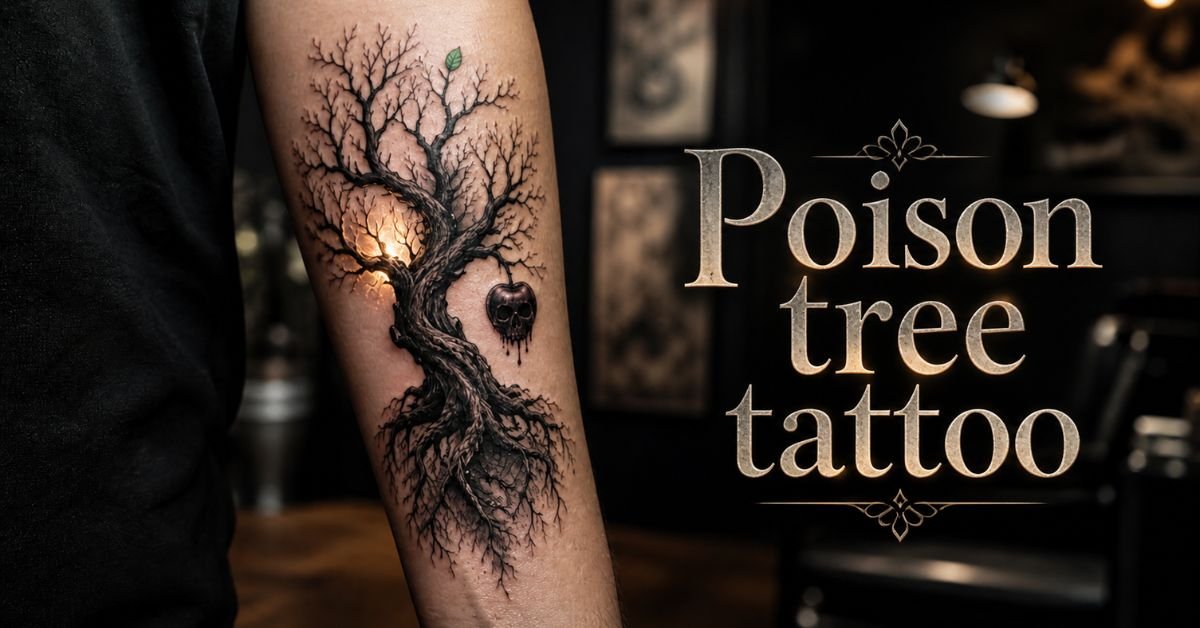
The tree represents an emotion planted, never handled. The roots can show old pain. The branches show how bitterness spreads. The fruit shows anger fed instead of released.
This tattoo can symbolize:
- Anger that was never spoken
- Betrayal, revenge, or broken trust
- Trauma caused by a toxic person
- Emotional boundaries after pain
- Healing, resilience, and personal growth
A strong poison tree design does not simply say, “I am angry.” It says, “I know what hidden anger can become, and I am choosing not to live there anymore.”
How William Blake’s Poem Shapes the Symbol
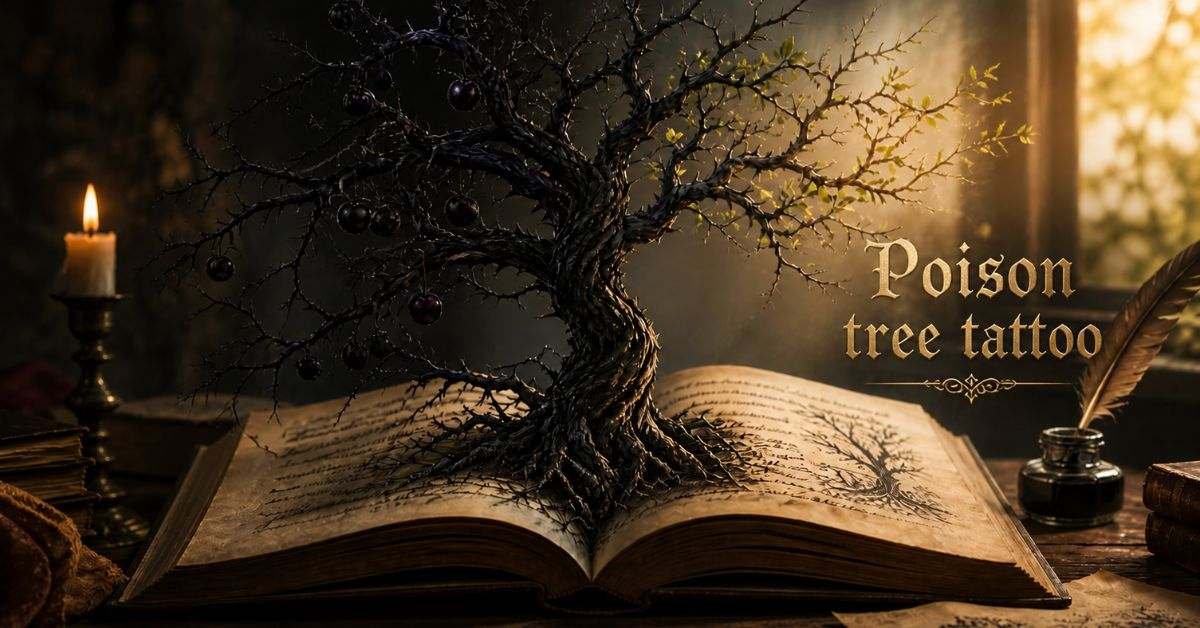
The poison tree tattoo meaning comes from Blake’s poem A Poison Tree. In the poem, anger ends when the speaker talks to a friend, but grows when he hides it from an enemy. The Poetry Foundation text shows this contrast: spoken wrath ends, while unspoken wrath grows.
The poem was first published in 1794 in Songs of Experience. It uses a tree as an extended metaphor for anger secretly fed by fear, tears, smiles, and deceit.
This is why the tattoo is deeper than a gothic tree. It asks one hard question: what are you feeding inside yourself?
Why People Choose This Tattoo
People often choose this design after a difficult chapter, such as toxic love, family conflict, workplace betrayal, grief, or a version of themselves they had to outgrow.
For some, the poison tree tattoo meaning is a reminder not to repeat old patterns. For others, it marks the moment they finally named the pain instead of pretending everything was fine.
Common reasons include:
- Leaving a relationship where they felt silenced
- Learning healthy emotional boundaries
- Forgiving someone without returning to them
- Healing from anger that once controlled them
- Accepting that growth can come from painful truth
The design can hold both darkness and recovery without glorifying resentment.
Symbolism Behind Each Design Element
A poison tree tattoo becomes more personal when each element has a reason. Instead of copying a random design, think about what part of the story belongs to you.
| Design Element | What It Can Symbolize |
| Roots | Old wounds, family patterns, buried memories |
| Trunk | Endurance, survival, emotional weight |
| Bare branches | Isolation, anger, emotional exhaustion |
| Poison apple | Temptation, revenge, consequence, resentment |
| Thorns | Protection, pain, boundaries, distrust |
| Falling leaves | Release, grief, letting go |
| New green growth | Healing, resilience, emotional rebirth |
| Broken branch | A relationship ended or a cycle stopped |
This is where the poison tree tattoo meaning becomes unique. A dead tree with one new leaf can show healing. A bright apple on a dark tree can show danger disguised as beauty.
Is a Poison Tree Tattoo Negative?
Not always. The poison tree tattoo meaning can look dark, but it is not automatically negative. The meaning depends on how the wearer frames it.
If the tattoo focuses only on revenge or hatred, it may feel heavy. When it includes healing details, it can become a symbol of emotional maturity.
A balanced version may include one healthy leaf, roots breaking through cracked ground, an apple falling away, light behind the branches, or a short quote about release.
Think of it like a scar. A scar proves pain happened, but it also proves survival.
Psychological Meaning: Why Suppressed Anger Matters
The poison tree tattoo meaning feels powerful because it matches a real human pattern. When anger is denied, it does not always disappear. It can turn into rumination, passive aggression, anxiety, resentment, or emotional shutdown.
Psychology research supports the idea that hiding emotion is not the same as resolving it. Gross and Levenson defined emotional suppression as consciously inhibiting emotional expression while emotionally aroused. Their study found that suppression reduced visible expression but did not remove the emotional experience; it also showed signs of increased physiological activation.
This does not mean every quiet person is unhealthy. It means emotions need safe processing. A tattoo can be part of that processing when it represents reflection, journaling, closure, or a healthier boundary.
Placement Ideas and What They Add
Placement changes how the tattoo feels. A visible tattoo may act as a daily reminder. A hidden tattoo may feel more private and personal.
| Placement | Best For | Meaning It Adds |
| Forearm | Medium tree, branch, apple design | A visible reminder to speak honestly |
| Upper arm | Larger shaded design | Strength and controlled visibility |
| Chest | Personal symbolic piece | Emotional pain close to the heart |
| Back | Large detailed tree | Carrying the past and transforming it |
| Ribcage | Private meaningful tattoo | Hidden grief or deep healing |
| Thigh | Detailed gothic or botanical design | Personal power and recovery |
| Wrist | Minimal branch or apple | Small reminder to release resentment |
| Shoulder blade | Tree with roots or moon | Moving forward with wisdom |
Before choosing placement, ask whether you want the poison tree tattoo meaning to be public, private, spiritual, literary, or emotional.
Best Design Styles for a Poison Tree Tattoo
A good artist can turn the same idea into many styles. Choose a design that matches your story, not just a trend.
Minimalist: Thin black tree, single apple, or small roots.
Gothic: Dark branches, ravens, mist, skulls, and heavy shading.
Fine-line literary: Delicate tree with a short Blake-inspired phrase.
Neo-traditional: Bold lines, red fruit, green poison tones, and decorative leaves.
Healing-focused: Dark trunk with new leaves, sunlight, flowers, or broken chains.
Common Mistakes to Avoid
The poison tree tattoo meaning can lose power when the design is rushed or too literal. A tattoo with too many random dark symbols may look cool but feel confused.
Avoid these mistakes:
- Choosing a design only because it looks edgy
- Adding skulls, snakes, and ravens without personal meaning
- Using a long poem quote that may blur over time
- Placing detailed roots in an area too small for clean aging
- Getting the tattoo during an emotional crisis without reflection
- Ignoring aftercare because black tattoos seem “easy”
Mayo Clinic notes that tattooing breaks the skin, so infection, allergic reactions, granulomas, keloids, and other risks are possible. It also advises using trained artists, sterile equipment, and careful healing habits.
Pro Tips Before You Get the Tattoo
Before booking, write one sentence that explains your personal reason. For example: “This tattoo reminds me not to feed anger in silence.” If you cannot explain it clearly, wait.
Ask your tattoo artist:
- Have you done tree, botanical, or gothic tattoos before?
- Will the branches and roots stay readable after healing?
- What size works best for this detail level?
- Can we add one healing element?
- What aftercare steps should I follow?
For long-term care, the American Academy of Dermatology recommends water-based lotion and SPF 30 or higher sun protection because UV light can fade tattoo ink. The FDA also warns that tattoos can involve adverse effects such as infections, allergic reactions, granulomas, keloids, swelling, burning, and removal problems.
Who Should Choose a Poison Tree Tattoo?
The poison tree tattoo meaning may be right for someone who wants emotional truth, not decoration. It fits people who enjoy poetry, symbolism, shadow work, gothic art, or meaningful body art.
It may be a good choice if you understand the Blake connection, want a reminder to handle emotions honestly, have moved through a toxic chapter, and prefer healing over revenge.
It may not be right if you only want a trendy dark tattoo. This symbol carries emotional weight, so choose it because it helps you remember, release, or grow.
FAQs
What does a poison tree tattoo mean?
The main poison tree tattoo meaning is suppressed anger that grows into resentment when it is not expressed or healed. It can also represent trauma, toxic relationships, emotional boundaries, and growth after pain.
Is William Blake the inspiration behind a poison tree tattoo?
Yes. The poison tree tattoo’s meaning is strongly inspired by William Blake’s poem A Poison Tree, where hidden wrath grows like a tree and produces destructive fruit.
Does a poison tree tattoo mean revenge?
It can, but it does not have to. Some people use it to represent revenge or consequence, while others use it as a reminder to avoid becoming bitter.
Can this tattoo symbolize healing?
Yes. It can symbolize healing when the design includes new leaves, light, falling fruit, broken chains, flowers, or roots growing into healthier ground.
What is the best placement for a poison tree tattoo?
The best placement depends on size and privacy. Forearms work well for visible reminders, while the back, chest, ribs, or thigh suit larger and more personal designs.
Should I add a quote from the poem?
A short phrase can work, but avoid long text. Fine lines and small lettering may blur over time, so ask your artist what size will age well.
Can both men and women get a poison tree tattoo?
Yes. The meaning is not gender-specific. It works for anyone who connects with its message about hidden anger, emotional pain, resilience, and growth.
Conclusion
The poison tree tattoo meaning is powerful because it tells the truth about emotions people often hide. It shows that anger, pain, and resentment can grow when they are fed in silence.
But this tattoo can also become a healing symbol. When designed with care, it can remind you to speak honestly, protect your peace, release toxic patterns, and grow beyond what once hurt you.
Visit the rest of the site for more interesting and useful articles.