

 By
By Introduction
In today’s world, technical interviews increasingly happen asynchronously or through take-home tasks. Your GitHub profile is no longer just a portfolio—it’s your performance stage. Candidates are now playing what’s called the “GitHub Games”—not video games, but structured workflows, coding habits, and clear communication via repositories that show your ability to thrive in real-world teams.
Whether preparing for a remote assessment or aiming to stand out among GitHub contributors, mastering these GitHub Games can help you dominate technical interviews and strengthen your developer brand.
What Are GitHub Games?
Despite the playful name, GitHub Games aren’t actual games. They are a metaphor for how candidates demonstrate skills through:
- Commit to hygiene
- Pull request discipline
- Branching strategies
- Peer feedback and collaboration
Think of it like this:
- Opening Move: Clear README that sets context
- Mid-Game: Thoughtful commit messages and PR descriptions
- Endgame: Merge requests, code reviews, and team collaboration
Top recruiters from FAANG companies, startups, and product teams now value candidates who excel in these GitHub-based interactions.
Why Technical Interviews Are Moving to GitHub
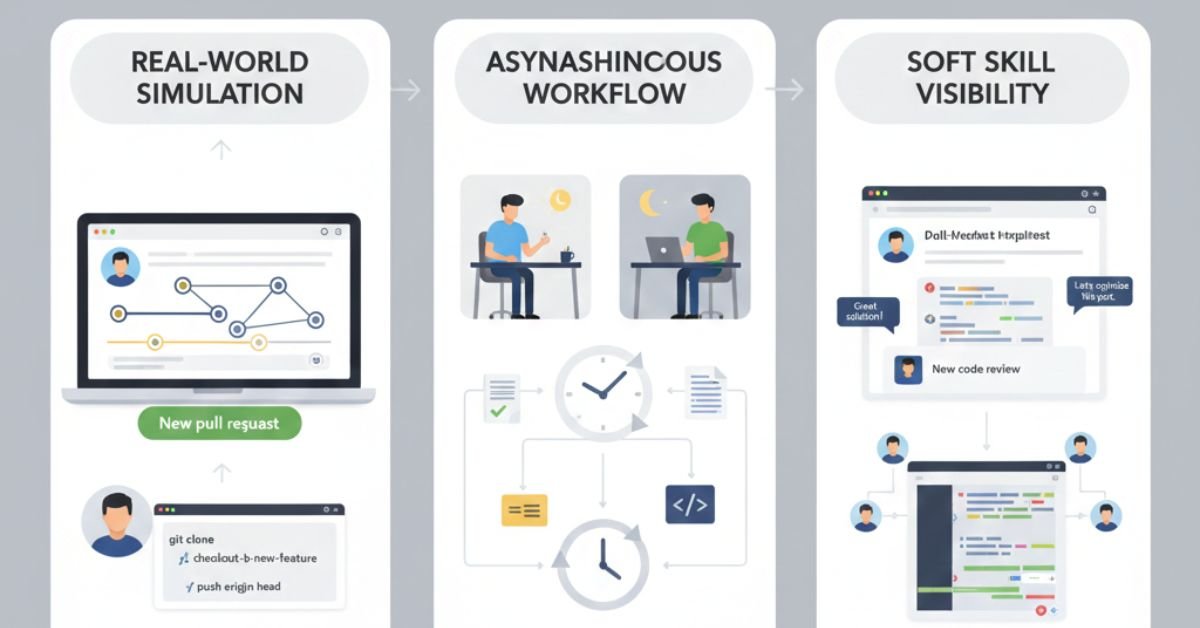
Companies increasingly prefer GitHub over traditional whiteboard or timed online tests because it mirrors real-world work:
- Real-World Simulation: Tasks resemble everyday development: cloning, branching, and submitting PRs.
- Asynchronous Workflow: Candidates can demonstrate their usual coding process with access to documentation and tools.
- Soft Skill Visibility: Your repo shows how you communicate, collaborate, and manage code.
GitHub itself supports take-home interviews for fairness, flexibility, and deep technical evaluation. Some companies also use interview-bot GitHub Actions or scaffolded repo templates to streamline assessments.
Common GitHub Interview Scenarios
Interviewers often hand over a repository and expect candidates to tackle real-world challenges. Here’s how to prepare:
- Your branch is out-of-date. How do you sync it?
- Consider the differences between merging and rebasing, implement testing strategies, and ensure effective communication with the team.
- Teammate PR fails CI. What’s your response?
- Step 1: Replicate the error locally.
- Step 2: Investigate CI logs
- Step 3: Patch or hotfix
- Step 4: Document and communicate findings in PR
- What branching model would you use for a SaaS team?
- Discuss GitFlow, trunk-based development, or hybrid workflows.
- Resolve a tricky merge conflict involving business logic
- Use a test-first approach, document your reasoning, and include PR comments.
Pro Tip: Practice with open-source repos or curated GitHub interview prep environments (e.g., Back-End-Developer-Interview-Questions).
Showcasing Communication, Not Just Code
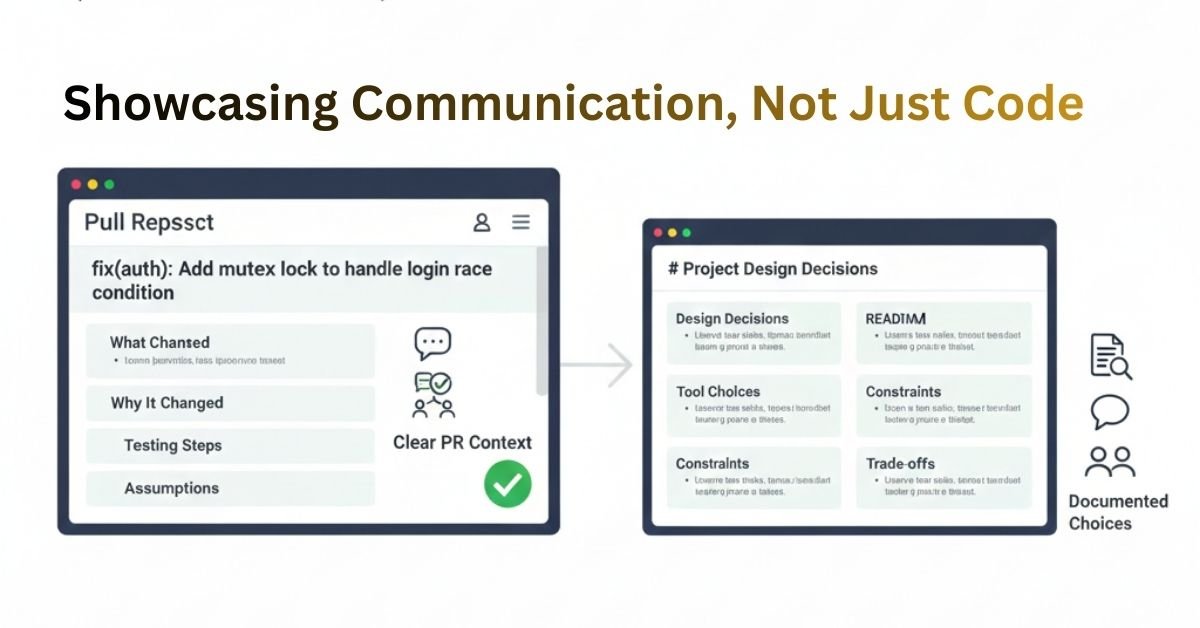
Technical correctness is necessary, but interviewers value clarity, collaboration, and professional communication. Improve your GitHub presence with these habits:
- Write Atomic, Purposeful commitments.
Example: fix(auth): Add mutex lock to handle login race condition - Submit PRs with Full context.
Include:- What changed
- Why it changed
- Testing steps
- Assumptions
- Document Design Decisions in README
Explain tool choices, constraints, and trade-offs.
Common Pitfalls and How to Avoid Them
| Challenge | Solution |
| Time Constraints | Build a minimal working version first, then list future improvements in PR notes |
| Merge Conflicts | Simulate conflicts locally on test branches and document resolution strategies |
| Over-Engineering | Focus on clarity and working solutions; explain trade-offs |
| Lack of Collaboration Signals | Use Issues, respond to review comments, and contribute documentation or tests |
An actionable checklist for GitHub-based interviews
Follow this checklist before submitting your repository:
- Clear README explains purpose, setup, and assumptions.
- Logical, atomic commits with concise messages
- Pull request includes scope, test strategy, and context
- Basic tests are written and passed
- Properly named branches follow your workflow.
- Document edge cases in issues or a README.
- Please prepare a 2–3 minute walkthrough of your code and decisions.
- Include linked issues or previous PRs to showcase collaboration
Treat your GitHub Games repo as your interview stage: clarity, communication, and collaboration often matter more than flashy libraries.
Demonstrating Collaboration and Soft Skills
Recruiters look for social signals in addition to technical skills:
| Soft Skill | GitHub Behavior |
| Ownership | Start and maintain projects with organized tasks and issues |
| Empathy | Write approachable README files and setup documentation |
| Adaptability | Evolve projects over multiple iterations and respond to feedback |
If you’re contributing to accessibility-focused projects (like NVDA), it adds further value and shows alignment with inclusivity goals.
Using Tools to Practice GitHub Games
Tools like Verve AI Interview Copilot can help you:
- Evaluate commit message quality
- Refine PR summaries and documentation clarity
- Simulate branching and merge scenarios
- Receive real-time feedback on communication tone and readability
FAQs
What are GitHub Games in interviews?
GitHub Games are workflows, coding habits, and collaboration practices on GitHub that demonstrate technical and soft skills during interviews.
Should I include tests in my GitHub take-home task?
Yes, even minimal tests show your code works, clarify assumptions, and boost credibility.
How do I handle a failing teammate’s PR?
Replicate locally, check CI logs, fix or revert, and communicate your steps clearly in the PR.
How do I showcase collaboration in my repo?
Use issues, respond to feedback, document decisions in PRs, and maintain a clean commit history.
How long should a GitHub interview submission take?
Focus on a minimal working solution within the allotted time and document “next steps” for improvements.
Conclusion
Winning the GitHub Games isn’t about flashy libraries—it’s about clarity, ownership, and collaboration. Each commit, PR, and issue tells your story as an engineer.
Approach your technical interviews like a GitHub game: your repo is your resume, your code is your story, and your PR is your pitch. Follow the actionable tips above, and you’ll stand out in any GitHub-based interview.
Visit the rest of the site for more interesting and useful articles.